

Author: Jason Waechter | Date: December 1, 2025 | Category: Uncategorized
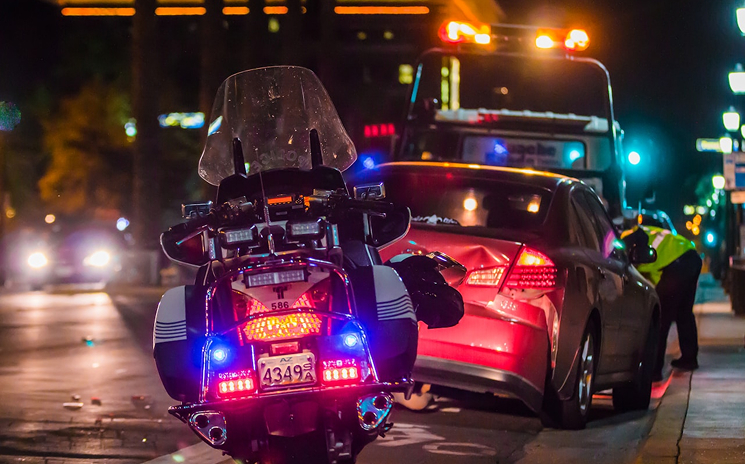
⚠️ Hypothetical Scenario: Picture a rider traveling through Detroit when police lights appear in the mirror. As the pursuit intensifies, a terrifying question emerges—can officers intentionally use their vehicle to knock a motorcyclist off their bike? The answer involves Michigan law, constitutional rights, and strict limits on police use of force.
Understanding these protections could be critical if you’re ever injured during a police encounter on your motorcycle.
If a crash involved police misconduct, contact us at 248-355-4701 to discuss your legal options.
Whether police conduct was lawful after contact with a motorcycle depends on the facts, the agency policy, the reason for the stop or pursuit, the risk to the public, and whether the force used was reasonable. Preserve video, witness information, police reports, medical records, and motorcycle damage photos as early as possible.
Related context: PIT maneuver motorcycle crashes and Michigan motorcycle no-chase policy.
Michigan has taken significant steps to restrict dangerous police chases. In March 2024, the Michigan State Police implemented new pursuit policies that drastically limit when troopers can engage in high-speed chases.
Under the current policy, Michigan State Police can only pursue vehicles when they have probable cause to believe the driver committed a violent or life-threatening felony. This represents a major shift toward prioritizing public safety over immediate apprehension.
⚖️ According to U.S. Department of Justice statistics, crashes occur in at least 30% of police chases nationwide. Injuries or fatalities happen in 5% to 17% of pursuits, making them one of the most dangerous situations officers face.
Michigan’s restrictive approach recognizes the severe risks involved. The policy specifically prohibits troopers from engaging in chases while operating motorcycles, unmarked vehicles, or special service vehicles—further reducing potential for deadly encounters.
The short answer is no—it’s virtually never legal for officers to intentionally knock a motorcyclist off their bike. Such actions would constitute excessive force under federal constitutional protections and Michigan law.
The U.S. Supreme Court established clear standards in Graham v. Connor (1989). Police use of force must be “objectively reasonable” based on the circumstances confronting officers at the moment. Courts consider factors including the severity of the suspected crime, whether the person poses an immediate threat, and whether they’re resisting arrest.
Intentionally striking a motorcycle with a police vehicle creates an extreme risk of death or catastrophic injury. Michigan motorcyclists faced 3,187 crashes in 2024, resulting in 168 fatalities, according to Michigan State Police statistics. The inherent vulnerability of motorcyclists makes any vehicular contact particularly dangerous.
Excessive force occurs when officers use more force than objectively reasonable under the circumstances. For motorcyclists, this includes any tactic that creates disproportionate risk of serious injury or death.
💡 Police are explicitly trained that certain tactics are too dangerous for motorcycles. PIT maneuvers (precision immobilization technique), ramming, or using patrol vehicles as barriers against motorcycles typically violate department policies because they pose extreme danger to riders.
The Graham standard requires examining what a reasonable officer would do in the same situation. When less dangerous alternatives exist—like waiting for air support, using spike strips strategically, or allowing a suspect to escape temporarily—aggressive vehicular tactics become harder to justify.
| Use of Force Factor | Excessive Force Indicator |
|---|---|
| Severity of Crime | Minor offense doesn’t justify life-threatening force |
| Immediate Threat Level | No weapon or danger to others present |
| Resistance/Evasion | Merely fleeing without endangering others |
| Available Alternatives | Safer methods ignored (helicopter tracking, identification) |
Michigan motorcyclists have specific constitutional protections during any police interaction. The Fourth Amendment guards against unreasonable searches and seizures, which includes excessive force during traffic stops or arrests.
You have the right to remain silent beyond providing your driver’s license, registration, and proof of insurance. You’re not required to answer questions about where you’ve been or where you’re going. You also have the right to decline searches of your motorcycle or belongings without a warrant, except in specific circumstances.
🚨 If you feel unsafe during a stop, you can request a supervisor respond to the scene. Keep your hands visible, avoid sudden movements, and clearly communicate your actions. Michigan law requires motorcyclists to pull over when signaled by police with lights and sirens.
If you’re involved in a crash during a police encounter, your immediate actions matter tremendously. Follow these critical steps to protect both your health and your legal rights.
Seek emergency treatment without delay, even if injuries seem minor. Adrenaline can mask serious injuries like internal bleeding, traumatic brain injury, or spinal damage. The University of Michigan Health Emergency Department operates as a Level One Trauma Center with comprehensive emergency resources available 24/7.
Document all medical treatment, follow prescribed care plans, and keep every medical record. This documentation becomes vital evidence if you pursue legal action.
If physically able, gather as much evidence as possible at the scene. Photograph vehicle positions, road conditions, your injuries, and property damage from multiple angles. Record video if it captures important details.
Obtain officer badge numbers, patrol car numbers, and names of all responding officers. Get contact information from witnesses—their accounts can prove critical. Note the exact time, location, weather conditions, and any statements officers make.
📌 The Third Judicial Circuit Court in Detroit’s Coleman A. Young Municipal Center handles civil rights claims in Wayne County. Proper documentation from the crash scene strengthens your case if litigation becomes necessary.
Police may ask you to provide a statement immediately after a crash. You have the right to decline until you’ve consulted with an attorney. Anything you say can be used against you in both criminal proceedings and civil litigation.
Avoid posting about the incident on social media. Insurance companies and defense attorneys routinely monitor social platforms for statements they can use to dispute your claims or minimize injuries.
Motorcycle crashes involving law enforcement require specialized legal knowledge. Police have substantial protections under qualified immunity, making these cases complex. An experienced Detroit motorcycle accident lawyer understands how to navigate these challenges.
We’ve handled over 1,000 motorcycle cases in Michigan, including incidents involving excessive force and police pursuits. Our results include a $27.5 million verdict for leg amputation caused by distracted driver negligence and multiple seven-figure settlements for injured motorcyclists. I Ride, I Get It—we’re motorcyclists who understand the unique challenges riders face.
This question comes up frequently in police encounters. Generally, officers can temporarily take your keys if they’re arresting you or impounding your motorcycle. However, taking keys as a search tactic or to prevent you from leaving when you’re free to go raises Fourth Amendment concerns.
Michigan’s search and seizure laws provide specific protections. Officers need either consent, a warrant, or exigent circumstances to search your motorcycle or its storage compartments. For a detailed analysis of when police can and cannot take your keys, visit our comprehensive guide on can cops take your keys.
⚖️ The Michigan State University Police maintains comprehensive resources about citizen rights during police encounters. Their community education programs help motorcyclists understand proper procedures for traffic stops and searches.
Certain situations demand immediate legal representation. If officers used aggressive maneuvers that caused your crash, if you suffered serious injuries during a pursuit, or if you were injured while complying with police instructions, consult an attorney immediately.
Early involvement of legal counsel protects your rights and preserves critical evidence. Police departments must retain certain records, dash cam footage, and body camera recordings, but they may not keep them indefinitely. An attorney can issue preservation letters ensuring nothing disappears.
🚨 Michigan’s statute of limitations typically gives you three years to file personal injury claims, but governmental claims have strict notice requirements. Highway defect claims require 120-day notice, while claims against the State of Michigan need 6-month notice filed with the Court of Claims. Missing these deadlines can destroy otherwise valid cases.
Signs you need legal representation include: physical injuries requiring hospitalization, disputes about who caused the crash, conflicting accounts from officers and witnesses, or department refusal to provide incident reports or video footage.
Michigan’s March 2024 policy change reflects national trends toward restricting dangerous pursuits. Colonel James F. Grady II, director of Michigan State Police, emphasized that protecting lives takes paramount importance over immediate apprehension.
Michigan recorded 288,880 total crashes in 2024, with motorcycle crashes increasing 4% to 3,187 incidents. Vulnerable road users experienced particularly steep increases, with work-zone deaths rising 17%.
| Pursuit Statistics | 2023 | 2024 | Change |
|---|---|---|---|
| Total Crashes | 287,953 | 288,880 | +927 (+0.3%) |
| Motorcycle Crashes | 3,065 | 3,187 | +122 (+4%) |
| Motorcyclist Fatalities | 165 | 168 | +3 (+2%) |
| Work Zone Deaths | 24 | 28 | +4 (+17%) |
If you’ve been injured in a motorcycle crash involving police, time-sensitive deadlines and complex governmental immunity rules make early legal representation critical.
We’ve handled over 1,000 motorcycle cases across Michigan, with results including a $27.5 million verdict for leg amputation caused by distracted driver negligence and multiple seven-figure settlements.
📱 As fellow riders, we understand the challenges motorcyclists face both on the road and in the legal system. I Ride, I Get It—we’re not just your attorneys, we’re part of the motorcycle community.
Call 248-355-4701 now for your free consultation. We work on a contingency basis—you pay nothing unless we recover compensation for you.
Q: Is it legal for police to hit a motorcycle during a chase in Michigan?
No, it’s typically not legal unless the officer’s actions meet the strict legal standard of “reasonable force” under Graham v. Connor. Most Michigan agencies ban high-risk tactics like knocking a rider off a motorcycle due to the extreme danger involved.
Q: What are my rights if police knock me off my motorcycle?
You have constitutional protections against excessive force under the Fourth Amendment. If you’re injured by unreasonable police actions, you may have grounds to sue under federal civil rights law (42 U.S.C. § 1983) or state personal injury law. Courts will evaluate whether the force was objectively reasonable given the circumstances.
Q: Can I sue the police if they caused my motorcycle crash in Michigan?
Yes, you can potentially file a lawsuit if the officer’s actions were reckless, negligent, or violated your constitutional rights. However, qualified immunity protects officers from liability unless they violated clearly established law. Consulting an attorney quickly is essential due to governmental immunity rules and short filing deadlines.
Q: Do Michigan police have rules about chasing motorcycles?
Yes, Michigan State Police implemented restrictive pursuit policies in March 2024. Troopers can only pursue when they have probable cause that the driver committed a violent or life-threatening felony. Many departments discourage or prohibit motorcycle pursuits entirely to reduce serious injury risk.
Q: What should I do if I was injured during a police motorcycle pursuit?
Get immediate medical attention, document the scene thoroughly, and speak with a lawyer before giving detailed statements. Call us at 248-355-4701 for a free consultation—we have 26 years of experience handling motorcycle cases in Michigan.

Results may vary depending on your particular facts and legal circumstances.
Provide a few simple details about your injury and our team will take it from there.