

Author: Jason Waechter | Date: December 1, 2025 | Category: Uncategorized
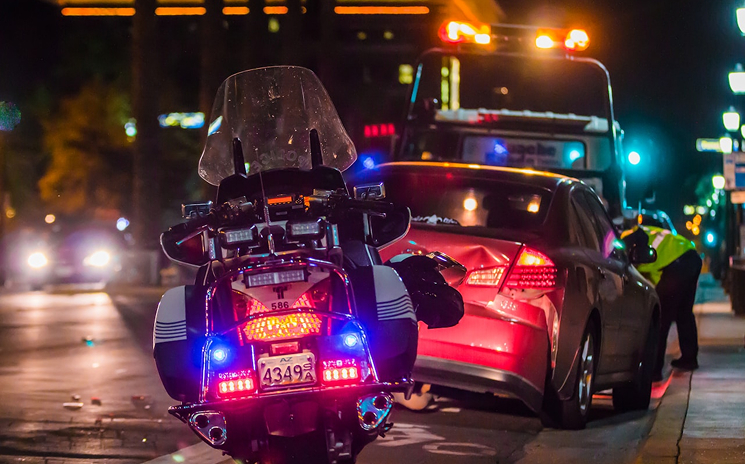
When you’re riding your motorcycle in Michigan and see flashing lights behind you, understanding police pursuit tactics becomes critical. The Precision Immobilization Technique (PIT maneuver) is a controversial law enforcement tactic that raises serious questions for motorcyclists.
The answer: While no Michigan statute explicitly prohibits PIT maneuvers on motorcycles, Michigan State Police policy now severely restricts high-speed pursuits. Using a PIT maneuver on a motorcycle is widely recognized as deadly force.
If you’ve been injured during a police motorcycle pursuit, contact our Detroit motorcycle accident lawyer for a free case review. “I Ride, I Get It.”
A PIT maneuver involving a motorcycle can be extremely dangerous. Any incident should be evaluated under the specific facts, agency policy, training, pursuit reason, traffic conditions, and injury outcome.
Related context: Michigan motorcycle no-chase law and police contact with a motorcycle.
A motorcycle PIT or pursuit-related incident should be reviewed under the specific facts, including video, policy, training, traffic conditions, speed, reason for the stop, and injury outcome. Save everything before the record disappears.
The Precision Immobilization Technique was developed in the late 1980s as a tactical method for ending vehicle pursuits. Officers align their vehicle’s front quarter panel with the target vehicle’s rear quarter panel, then make contact to force a spin-out.
While the maneuver can work on four-wheeled vehicles at low speeds, using it on motorcycles creates catastrophic risks. A motorcycle has only two wheels, limited mass, and an exposed rider with virtually no protection when forcibly disabled.
⚖️ Many law enforcement agencies classify PIT maneuvers on motorcycles as deadly force because the likelihood of serious injury or death is extremely high.
In March 2024, Michigan State Police Director Col. James F. Grady II announced significant changes to MSP’s pursuit policy, emphasizing public safety over immediate apprehension.
Under the new MSP policy, enforcement members may only pursue if there’s probable cause the driver committed a life-threatening or violent felony. According to U.S. Department of Justice statistics, crashes occur in at least 30% of vehicle pursuits, and injuries or fatalities occur in 5 to 17% of pursuits.
Additionally, troopers cannot engage in vehicle chases while operating motorcycles, unmarked vehicles, or when emergency equipment is inoperable. For a related topic about police authority during traffic stops, read about whether can cops take your keys.
Michigan law provides specific standards for when law enforcement can use force. Under MCL 780.972, officers must have an honest and reasonable belief that force is necessary to prevent imminent death or great bodily harm.
The Michigan Self-Defense Act requires that police use of force be proportional to the threat presented. This means using a PIT maneuver on a motorcycle—knowing it will likely cause severe injury—requires justification beyond a traffic violation or property crime.
Michigan State University’s Department of Police and Public Safety trains officers extensively on use-of-force decisions, weighing the danger of allowing a suspect to flee against the risks their actions create for the public, the suspect, and themselves.
The answer is complex. No Michigan statute explicitly bans PIT maneuvers on motorcycles. However, MSP policy now severely restricts pursuits and implicitly discourages PIT use on two-wheeled vehicles due to extreme danger.
Many law enforcement training programs classify PIT maneuvers on motorcycles as deadly force, meaning officers should only employ the tactic when deadly force is justified—typically when the fleeing motorcyclist poses an imminent threat of death or serious bodily injury to others.
Policy differs from law. While MSP’s internal policy restricts pursuits, not all Michigan agencies follow identical guidelines, creating inconsistency across jurisdictions.
📌 Using a PIT maneuver on a motorcycle could subject an officer and their department to excessive force claims, especially if the underlying offense didn’t warrant deadly force.
| Scenario | Likely Legality | Risk Level |
|---|---|---|
| PIT on motorcycle for violent felony | Potentially justified | Extremely High |
| PIT on motorcycle for traffic violation | Unjustified/excessive force | Extremely High |
| PIT on motorcycle for property crime | Likely unjustified | Extremely High |
| Pursuit without PIT for violent felony | Within policy | High |
| Terminating pursuit for minor offense | Recommended under policy | Low |
When police officers employ excessive force during motorcycle pursuits, they may face civil liability and criminal charges. Victims or their families can file personal injury or wrongful death lawsuits against the officer and their department.
Civil liability arises when officers violate constitutional rights or act with gross negligence. If an officer uses a PIT maneuver on a motorcyclist fleeing from a minor traffic violation, that action may constitute excessive force under the Fourth Amendment.
💡 Dashcam and bodycam footage becomes crucial evidence in these cases. The Third Judicial Circuit of Michigan (Wayne County Circuit Court) in Detroit, located at 2 Woodward Avenue, handles many civil cases arising from police conduct.
If you or a loved one were injured during a police motorcycle pursuit, call us today at 248-355-4701.
When an officer signals you to stop, Michigan law requires compliance. MCL 750.479a and MCL 257.602a make it illegal to willfully fail to obey a police officer’s direction to stop.
However, you have rights even when being pursued. Officers must balance their duty to apprehend suspects against public safety. If police use excessive force that results in your injury, you may have grounds for a civil rights lawsuit regardless of the underlying traffic violation.
🚗 Hypothetical Scenario: A motorcyclist runs a red light and accelerates when an officer attempts a traffic stop. The officer pursues at high speed through residential neighborhoods. When the motorcyclist slows at an intersection, the officer performs a PIT maneuver, causing the rider to crash and suffer a traumatic brain injury. Under current MSP policy, this pursuit likely violated department guidelines since running a red light doesn’t constitute a life-threatening felony.
Our firm has secured significant results in motorcycle injury cases, including a $1,500,000 settlement for a motorcyclist who suffered a broken leg from auto negligence. While that case didn’t involve police pursuit, it demonstrates the serious compensation available when negligence causes motorcycle injuries.
A motorcycle lawyer can help you navigate the complex legal landscape following a pursuit-related injury.
Yes, but success depends on proving the officer’s use of force was excessive or unjustified. You must demonstrate that no reasonable officer would have used that level of force under the circumstances.
Burden of proof falls on the plaintiff. You must show:
The University of Michigan Department of Public Safety and other agencies maintain detailed pursuit policies. Obtaining these policies through discovery can show whether an officer violated departmental guidelines, strengthening excessive force claims.
🚨 Hypothetical Scenario: A motorcyclist fails to stop for a suspected suspended license. Officers pursue through multiple counties at speeds exceeding 100 mph. Another agency uses a PIT maneuver, causing the motorcycle to crash into a guardrail. The rider suffers a severe leg injury requiring amputation. Because suspended license violations don’t constitute violent felonies, this pursuit likely violated policy, and the PIT maneuver constituted excessive force. Such catastrophic injuries involving amputation could result in multi-million dollar settlements.
Timing matters critically. Michigan’s statute of limitations for personal injury claims is generally three years, but claims against governmental entities have much shorter notice requirements—often 120 days to six months depending on the type of claim.
Michigan has no uniform statewide policy governing police pursuits beyond MSP’s internal guidelines. Local departments create their own policies, leading to significant variation.
Some departments follow restrictive policies similar to MSP, limiting pursuits to violent felonies. Others maintain broader pursuit authority for property crimes or traffic violations.
Training standards also vary. While all Michigan officers must complete training through the Michigan Commission on Law Enforcement Standards, individual agencies provide additional specialized training. Departments with inadequate training may be more likely to employ dangerous tactics inappropriately.
If you’ve been injured during a police pursuit or any motorcycle accident in Michigan, time is critical. Our firm has achieved significant results for injured motorcyclists, including a $27,512,000 verdict for leg amputation and a $1,500,000 settlement for a motorcyclist who suffered a broken leg.
We understand the unique challenges bikers face, both on the road and in the courtroom. As riders ourselves, we know that motorcyclists often face bias and prejudice after crashes. Our “I Ride, I Get It” approach means we fight aggressively to protect your rights and secure the compensation you deserve.
Contact us for a free case review. We work on a contingency fee basis—you pay nothing unless we win your case.
Not explicitly illegal under state law, but MSP policy strongly discourages it due to safety risks. Most law enforcement training classifies PIT maneuvers on motorcycles as deadly force, which should only be used when necessary to prevent imminent death or serious injury.
The rider typically suffers serious injuries including road rash, broken bones, traumatic brain injuries, or death. Victims may have legal claims depending on whether the force used was justified.
Yes, if the use of force was excessive or unnecessary. You must prove the officer’s actions were unreasonable and directly caused your injuries.
No. While MSP restricts pursuits to violent felonies, local agencies may have different standards.
Contact an experienced motorcycle accident attorney immediately. Document your injuries, preserve evidence including photos of the crash scene and your motorcycle, and seek medical attention. Don’t provide statements to investigators without legal counsel present. Call us at 248-355-4701 for a free consultation.

Results may vary depending on your particular facts and legal circumstances.
Provide a few simple details about your injury and our team will take it from there.